The ongoing destruction of the natural world raises critical questions about responsibility. How do we remember the victims, both human and non-human? And how do we negotiate the difficult question of who is to blame, especially in situations where we are all in one way or another implicated? Contemporary culture plays a crucial role in addressing these questions.
The aim of this project is to understand how environmental degradation is being framed and remembered as violence in contemporary culture, and how representations of such ecological violence articulate and reflect on questions of guilt, implication, and responsibility. Ecological violence has deep historical roots that tie it to other forms of violence, especially colonialism and genocide. Writers, artists, and filmmakers are finding ways of representing these ‘ecologies of violence,’ making visible the historical, structural and discursive links between crimes against humanity and crimes against nature.
This will be the first large-scale cross-media study of the cultural imagination of ecocide and other forms of eco-violence. Drawing on recent approaches in memory studies and ecocriticism, we will elaborate an innovative ecological approach that can account for the connections between different forms of violence and their cultural representation and memory.
This project will effect a reorientation in cultural memory studies and ecocriticism toward a conceptualization of cultural memory in more-than-human terms. Paying attention to how the histories of suffering of humans and non-humans are entangled fundamentally changes the way we think about responsibility.
Would you like to stay informed about our activities and upcoming events? You are very welcome to subscribe to our mailinglist.
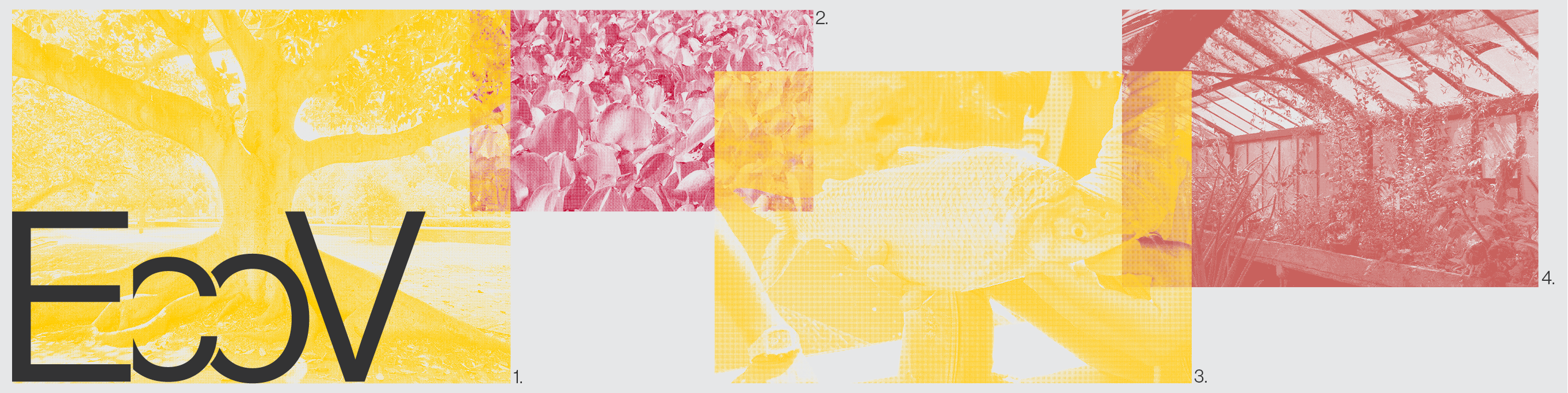
Banner images:
- Susanne Knittel, 2024, Moreton Bay Fig, UCLA Campus, Los Angeles, California, USA (seeds brought from Australia in the 1870s).
- Ifor Duncan, 2024, Water Hyacinths on the reservoir of the Hidroituango Megadam, Cauca river, Colombia.
- Ifor Duncan, 2024, A bocachico fish on the Hidroituango Megadam, Cauca river, Colombia.
- Sofia Lovegrove, 2018, Tropical Botanic Garden of Belém, Lisbon, Portugal (former Colonial Garden).
News
-
Susanne Knittel at Workshop on Rights of Nature in Anthropocene Literature
On 2 July, Susanne Knittel participated in the workshop Rights of Nature in Anthropocene Literature at the University of Vechta (Germany). The workshop was organized by Gabriele Dürbeck and Simon Probst in the context of their DFG project Das Naturkulturelle Gedächtnis im Anthropozän and it brought together scholars examining how literary and aesthetic forms engage with questions…
-

Practicing Multispecies Justice: A Conversation with Danielle Celermajer
On June 1, EcoViolence and the Utrecht Network for Environmental Humanities hosted a conversation with Danielle Celermajer, moderated by Susanne Knittel, on how to conceptualize and enact justice in a more-than-human world. The discussion began from a shared recognition: dominant frameworks of justice—historically centred on human subjects, harms, and rights—are no longer adequate to the…
-
Looking back to the Post-Extractive Assemblies Lab
Over four months, the Post-Extractive Assemblies Lab became a shared viewing and reading table, a space for experimentation, and discussion, and it now comes to its end. Convened by Salomé Lopes Coelho (Postdoctoral Researcher, EcoViolence) and Ana Robles Pérez (KABK The Hague), the Lab brought practices of theory and artistic practice into dialogue around post-extractivist…
Agenda
-
Salomé Lopes Coelho presents at International Symposium ‘media/environment. Screens and Streams in the Age of Climate Crisis’
This presentation examines how collaborative and experimental documentaries, as well as investigative and science communication films and video installations addressing an ongoing lithium extraction conflict in Covas do Barroso construct the memory of ecological violence. By reworking environmental data, collaborative filmmaking, and assembling testimonial and embodied perspectives, these films reinforce and/or resist extraction framed as…
-

Ifor Duncan gives invited talk at Kontekst Collective
Our Postdoc Ifor Duncan will give an invited talk titled “The Causal River: Submerged Audio-Visual Practice for Devastated Ecologies” as part of the Volatile worlds: Image, Ecology, Extractivism series organized by Alice Cazenave and Lee Douglas on June 23, 2026; 5-7pm at Helm Studios, 3 Borwick St, Deptford, London SE8 3GH Drawing on an audio-visual research…
-
Ifor Duncan gives keynote at the Liquid, Solid & Gaseous: Remembering Through and with Water Conference at King’s College London
On June 25th, our Postdoc Ifor Duncan will provide a keynote entitled The Depositional Zone: Archive, Evidence and the Causal River for the Liquid, Solid & Gaseous: Remembering Through and with Water Conference at King’s College London organised by Elisabetta Visaggio & Josefina Vidal Miranda. The talk will draw on practice-based research methods conducted by Duncan in contexts where rivers and…