

Dreaming with the Yanomami: ‘The Falling Sky’
On the evening before Brazil’s presidential election, we hosted the second event in the film series Projecting Post-Extractivism, a screening of The Falling Sky (2024). The series discusses extractivism and post-extractivist world configurations through cinema, and is organised by Salomé Lopes Coelho in collaboration with BAK Basecamp and the Network for Environmental Humanities, with the

Looking back: ‘Post-Extractivist Propositions: Moving Images and Ecologies of Violence’
On 8–9 October, our project hosted the workshop Post-Extractivist Propositions: Moving Images and Ecologies of Violence, organised by Salomé Lopes Coelho and the EcoViolence team. More than 20 international scholars, artist-researchers, filmmakers and activists came together at Utrecht University to explore a shared question: how do moving images intervene in ecologies of violence and extractivism,
Susanne Knittel at Workshop on Rights of Nature in Anthropocene Literature
On 2 July, Susanne Knittel participated in the workshop Rights of Nature in Anthropocene Literature at the University of Vechta (Germany). The workshop was organized by Gabriele Dürbeck and Simon Probst in the context of their DFG project Das Naturkulturelle Gedächtnis im Anthropozän and it brought together scholars examining how literary and aesthetic forms engage with questions
Practicing Multispecies Justice: A Conversation with Danielle Celermajer
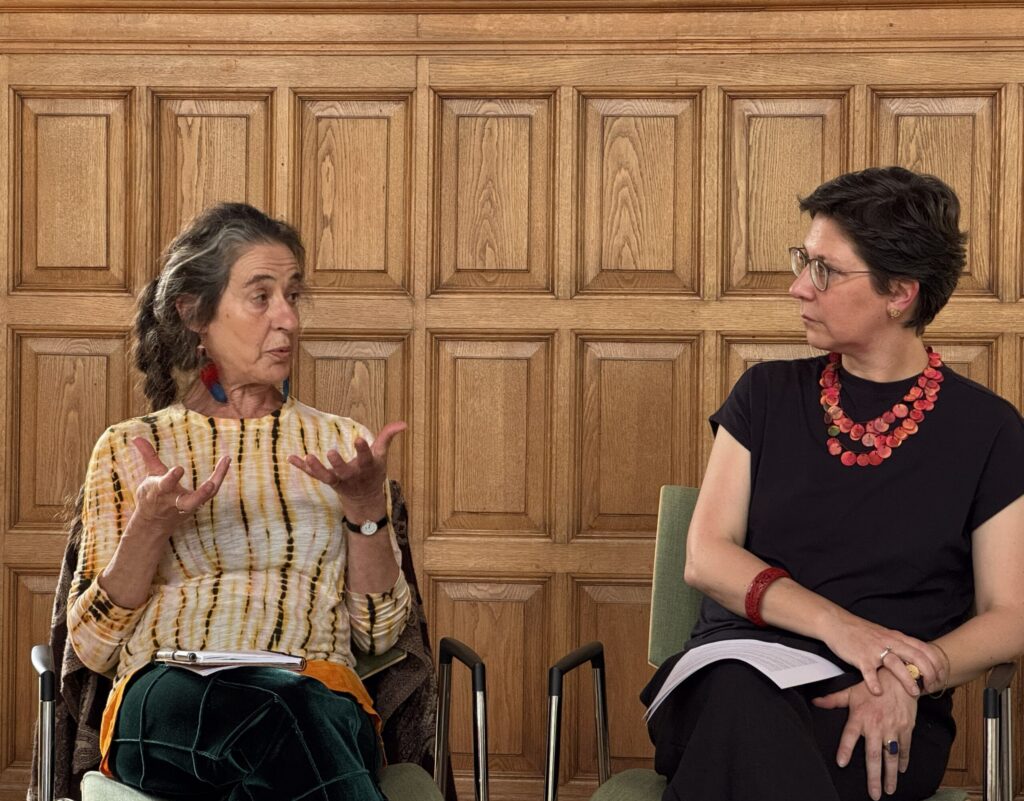
On June 1, EcoViolence and the Utrecht Network for Environmental Humanities hosted a conversation with Danielle Celermajer, moderated by Susanne Knittel, on how to conceptualize and enact justice in a more-than-human world. The discussion began from a shared recognition: dominant frameworks of justice—historically centred on human subjects, harms, and rights—are no longer adequate to the
Looking back: The Post-Extractive Assemblies Lab
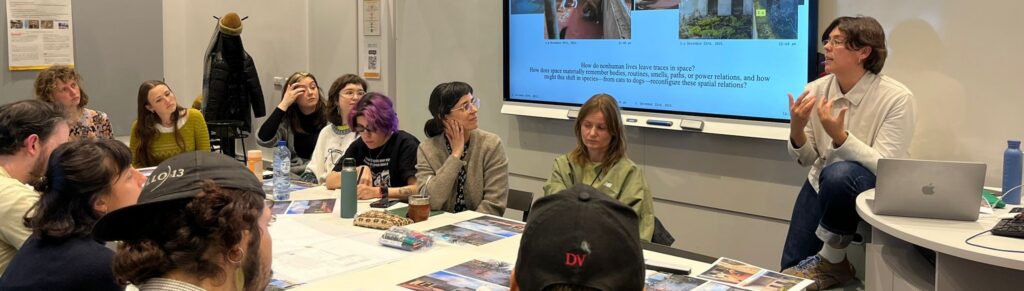
Over four months, the Post-Extractive Assemblies Lab became a space for reading, viewing work in progress, experimentation, and discussion, and it is now concluded. Convened by Salomé Lopes Coelho (Postdoctoral Researcher, EcoViolence) and Ana Robles Pérez (KABK The Hague), the Lab brought practices of theory and artistic practice into dialogue around post-extractivist propositions emerging in
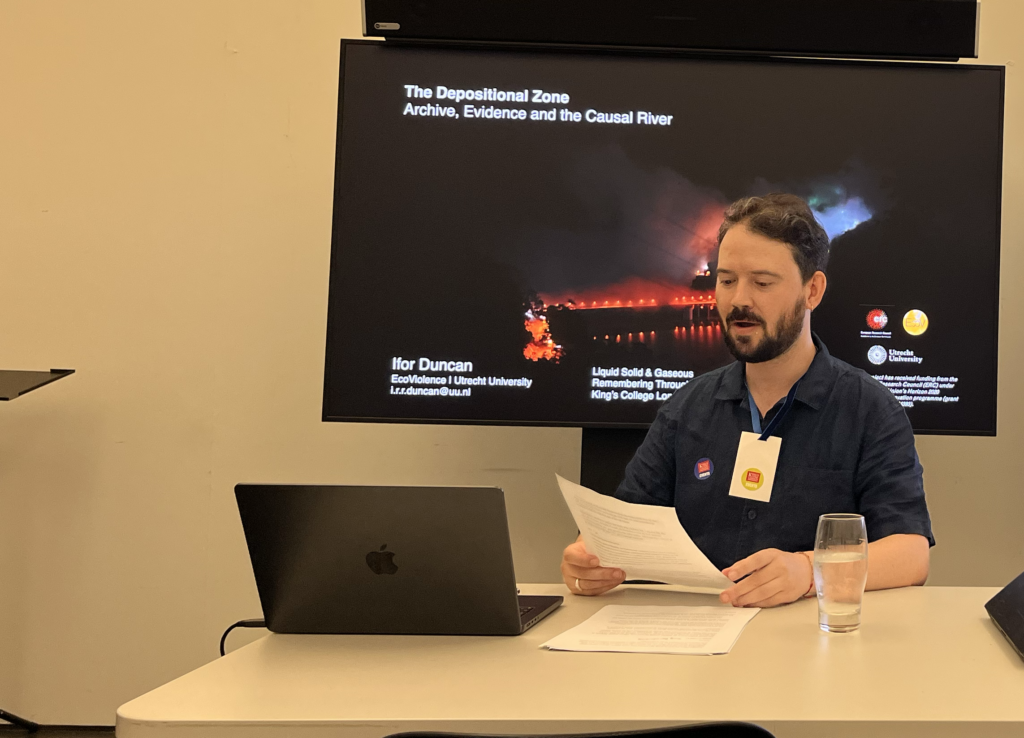
Ifor Duncan presented a keynote at the Liquid, Solid & Gaseous: Remembering Through and with Water Conference at King’s College London
On June 25th, our Postdoc Ifor Duncan provided the keynote entitled “The Depositional Zone: Archive, Evidence and the Causal River” at the Liquid, Solid & Gaseous: Remembering Through and with Water Conference at King’s College London organised by Elisabetta Visaggio & Josefina Vidal Miranda. The talk drew on practice-based research methods conducted by Ifor in contexts where rivers and political violence intersect. Duncan
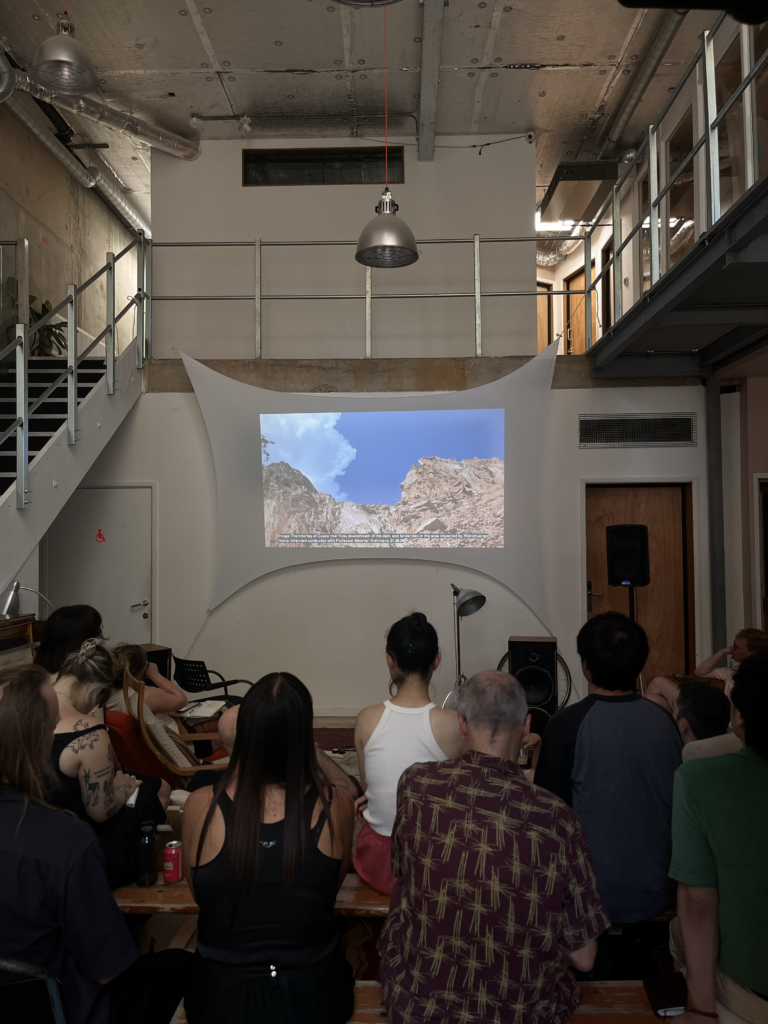
Ifor Duncan gives invited talk at Kontekst Collective
Our Postdoc Ifor Duncan gave a lecture titled “The Causal River: Submerged Audio-Visual Practice for Devastated Ecologies” as part of the Volatile worlds: Image, Ecology, Extractivism series organized by Alice Cazenave and Lee Douglas. At a well attended event on a swelteringly hot June 23rd in London Ifor drew on his audio-visual research practice to address
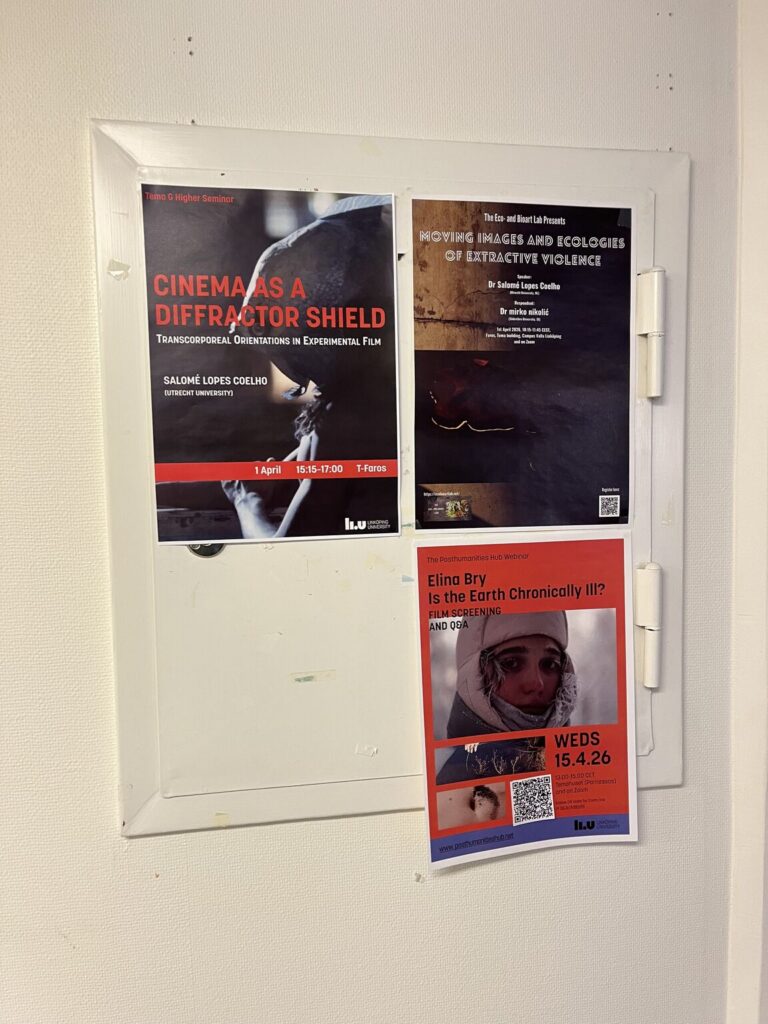
Salomé Lopes Coelho speaks at Linköping University
In early April, Salomé Lopes Coelho was a guest speaker at Linköping University, delivering two talks, each dedicated to a different thread of her research. Organised by The Eco- and Bioart Lab, the first talk, Moving Images and Ecologies of Extractive Violence, examined the affordances of moving image practices in relation to extractive violence, with
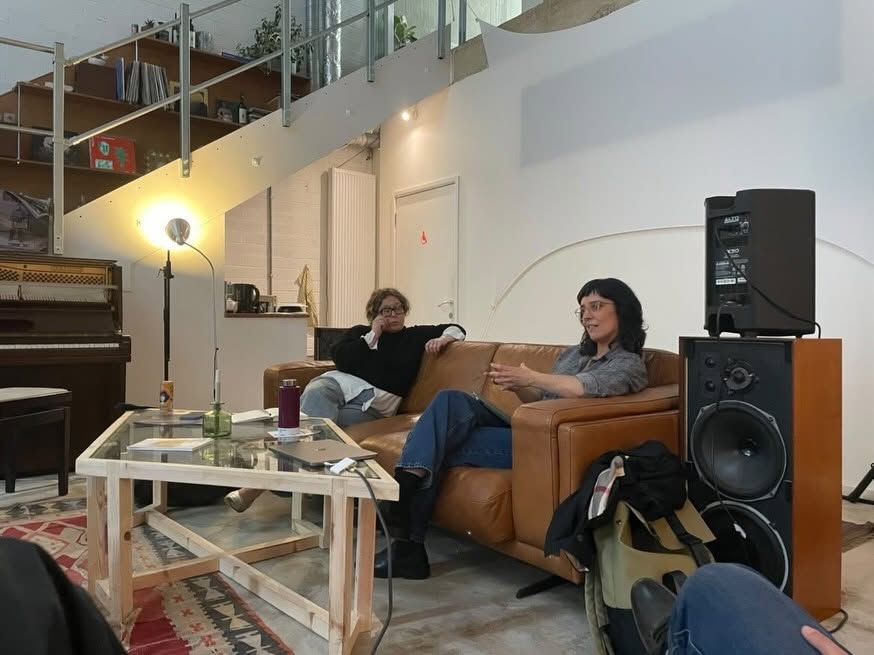
Salomé Lopes Coelho at Goldsmiths
On 11 June, Salomé Lopes Coelho delivered a talk at the Goldsmiths Centre of Visual Anthropology Public Programme. Taking baldios (common lands in northern Portugal) as a figure, Salomé explored how moving image practices, from collaborative documentaries to video installation and investigative films, render extractivism as ecological violence and intersect with longer histories of dispossession and
Ifor Duncan presents at Blue History Network Graduate forum, Leiden University
On March 24 Ifor Duncan spoke at the Blue History Network’s Graduate forum at the Roosevelt Institute for American Studies, Leiden University. Ifor presented examples from his research at the intersections of political violence with devastated river ecologies and dispossessed communities. Drawing on moving image, sound investigation, and interviews, his talk, ‘River Practice,’ reflected on